
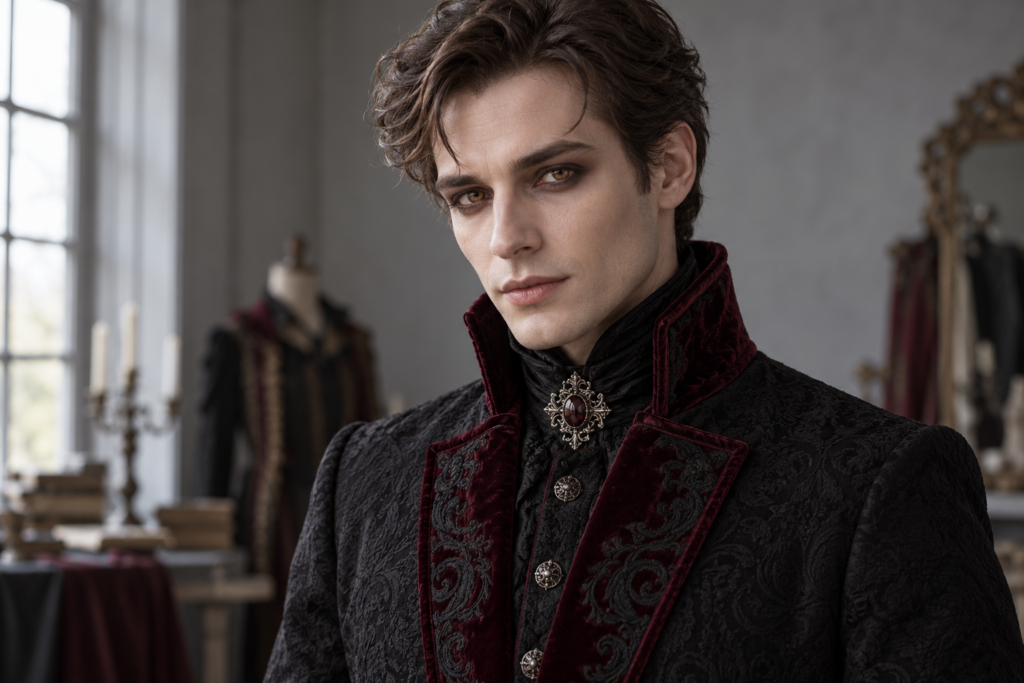
A Halloween costume becomes more convincing when its smaller details work together, from the shape of a jacket to the expression around the eyes. For a vampire or supernatural character, halloween contact lenses can provide a dramatic focal point. Choosing a limited colour palette helps connect that feature with the clothing and make-up. A softer fantasy look may suit coloured contact lenses that complement earthy fabrics, silver jewellery or a carefully styled wig. The character should remain recognisable through its silhouette and accessories, even without an eye effect. When the costume calls for a stronger transformation, halloween contact lenses can support the theme alongside restrained facial details.
Choose Details That Tell the Same Story
A clear character concept makes costume planning easier. “A vampire attending a formal dinner” gives more direction than simply “something scary”. It suggests a tailored jacket, polished shoes, a dark colour scheme and perhaps a single antique-looking accessory. Each choice contributes to the same story.
Similarly, a woodland witch might wear layered fabrics, weathered boots and a headpiece made from artificial leaves. A ghostly traveller could combine an old-fashioned coat with faded colours and a worn suitcase. These details make the costume distinctive without requiring an elaborate outfit.
Three defining features are often enough to establish the character. One might shape the silhouette, another draw attention to the face, and the third provide a recognisable accessory. Additional items should earn their place by strengthening the theme or serving a practical purpose.
A costume can lose its direction when unrelated pieces accumulate. A dramatic cape, several large props and elaborate facial decorations may all look appealing separately, yet feel disconnected together. Editing the outfit before the event helps its strongest features stand out.
Give the Face a Clear Focal Point
Facial styling works best when there is a deliberate place for attention to settle. If the eyes are the main feature, softer lip colour and simpler cheek shading can keep the look balanced. If the character depends on an exaggerated mouth or a detailed forehead design, the surrounding make-up can remain understated.
Colour provides an easy way to connect the face with the outfit. A small burgundy detail can echo a velvet collar, while bronze shading can complement brown leather accessories. Repeating one accent colour in two or three places creates continuity without making every item match.
The finish also affects the character’s appearance. Matte textures can suit a weathered or ghostly theme, while selected metallic accents may work for an enchanted figure. Applying shimmer everywhere can reduce the impact of the areas intended to catch attention.
Wigs deserve a trial alongside the make-up. A fringe may cover an important detail, and a dark wig can change the balance of an otherwise pale costume. Testing both together makes adjustments easier before the final preparation.
Treat Eye Accessories as More Than Costume Props
Cosmetic lenses require the same attention to fitting and care as other contact lenses. An optometrist should assess suitability and explain their use, even when no vision correction is needed. Incorrect fitting or handling can cause eye injuries and infections.
Preparation should include following the prescribed wearing and care instructions, practising insertion and removal as advised, and keeping lenses for individual use. They should never be shared. Redness, ongoing pain, discharge or reduced vision call for removal and prompt assessment by an eye-care professional.
The character should still work if lenses cannot be worn. A recognisable silhouette, coordinated make-up and one strong accessory give the outfit enough identity to carry the theme independently.
Make Props Useful and Manageable
A prop should help explain the character without becoming a burden. A small spell book can suit a witch, an ornate walking stick may complement a gothic figure, and a lightweight suitcase can support a ghostly traveller. One well-chosen item often contributes more than several loosely related accessories.
Size matters when the event involves crowded rooms, dancing or moving between venues. Large wings and oversized headpieces need space, while a long cape can become awkward around chairs or stairs. These pieces should be tested during ordinary movements, including sitting down and turning around.
Hands also need some freedom. A costume that requires carrying multiple objects can make simple tasks inconvenient. Pockets or a discreet bag can keep everyday essentials accessible while allowing the main prop to remain part of the performance.
Rehearse the Complete Look
A short rehearsal helps identify problems that individual fittings miss. Jewellery may catch on a wig, a collar may disturb facial make-up, or a headpiece may shift when the wearer bends forward. Checking these interactions gives time for small repairs.
Photographs taken from a few steps away can show whether the costume reads clearly as a complete character. Close-up details may look impressive but contribute little at a distance. The outfit’s shape and strongest colour choices should still communicate the theme.
The final check should include footwear, visibility and ease of movement. A memorable Halloween costume combines a clear character with details that remain comfortable and manageable throughout the event.